

How far does a sneeze travel when you let out that sudden burst of air and droplets? This question has become more important than ever, especially after what we’ve all been through with health concerns.
Scientists and medical experts have spent countless hours studying sneeze patterns, droplet spread, and airborne transmission.
The answer might shock you – and it’s something every person should know to protect themselves and others around them.





What Happens When You Sneeze?
Your body performs an incredible feat every time you sneeze.
The whole process starts when something irritates your nose – dust, pollen, bright light, or even a sudden temperature change.
Your brain sends signals faster than you can think.
Your tongue presses against the roof of your mouth.
Your eyes automatically close.
Your chest muscles contract with surprising force.
Then comes the explosive release – air rushes out of your nose and mouth at speeds that would make your head spin.
The entire sneeze process takes about 3 seconds from start to finish.
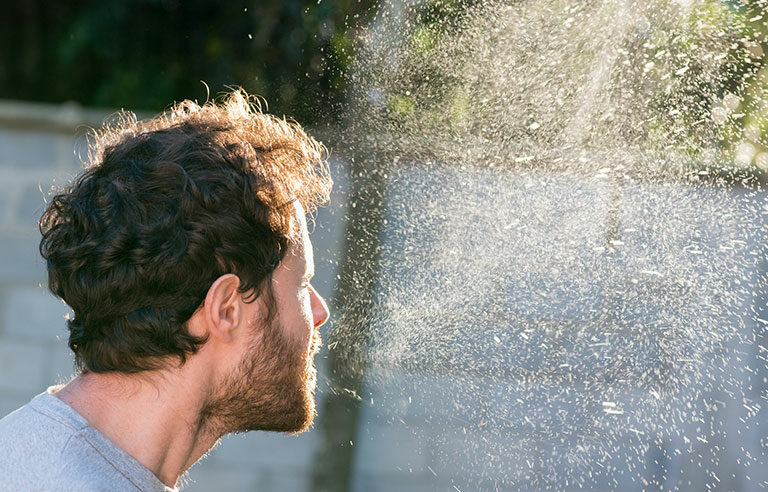
But those 3 seconds create a powerful spray of droplets that travel much farther than most people realize.
The Science Behind Sneeze Distance
Droplet Physics and Air Dynamics
- Scientists use high-speed cameras and advanced measuring tools to study exactly how far sneezes travel.
- The physics behind a sneeze involves several key factors that determine distance.
- Air pressure builds up in your lungs before the sneeze.
- This pressure gets released through your nose and mouth opening.
- The speed of expelled air creates a turbulent cloud of droplets.
- Larger droplets fall to the ground quickly due to gravity.
- Smaller droplets stay airborne much longer and travel farther distances.
- Temperature and humidity in the room affect how droplets behave.
- Air currents and ventilation systems can carry droplets even farther than normal.
Velocity and Force Measurements
- Researchers have measured sneeze velocities using specialized equipment.
- The average sneeze exits your body at 100 miles per hour.
- Some powerful sneezes can reach speeds up to 160 miles per hour.
- That’s faster than most cars drive on highways.
- The force generated equals about 2.5 times atmospheric pressure.
- Your diaphragm and chest muscles create this incredible pressure.
- This explosive force launches thousands of droplets into the air around you.
How Far Does a Sneeze Actually Travel?
Traditional Distance Measurements
- For decades, doctors believed sneezes traveled about 3 to 6 feet maximum.
- This measurement formed the basis for social distancing guidelines.
- Medical textbooks taught this distance for generations of healthcare workers.
- But recent research using better technology tells a different story.
- Modern studies show sneezes travel much farther than previously thought.
Latest Research Findings
- MIT researchers conducted groundbreaking studies on sneeze distance.
- Their findings revealed sneezes can travel up to 26 feet horizontally.
- Some droplets remain airborne for up to 10 minutes after a sneeze.
- The sneeze cloud expands as it moves away from the person.
- Environmental factors significantly impact these distances.
- Indoor spaces with poor ventilation increase travel distance.
- Outdoor environments with wind can carry droplets even farther.
Factors That Affect Distance
Several important factors determine exactly how far your sneeze travels:
Individual Physical Factors:
- Lung capacity affects the force of your sneeze
- Age influences sneeze strength and volume
- Health conditions can change sneeze patterns
- Body size correlates with sneeze power
Environmental Conditions:
- Room temperature affects droplet behavior
- Humidity levels change how long droplets stay airborne
- Air circulation patterns in the space
- Presence of obstacles like furniture or walls
Sneeze Characteristics:
- Whether you cover your mouth and nose
- The direction you’re facing when you sneeze
- How much buildup occurs before the sneeze
- Whether you sneeze once or multiple times
Different Types of Droplets in a Sneeze
Large Droplets vs. Small Droplets
- Not all sneeze droplets behave the same way.
- Large droplets measure more than 100 micrometers in diameter.
- These heavy droplets fall to the ground within 3 to 6 feet.
- Gravity pulls them down quickly due to their weight.
- Small droplets measure less than 10 micrometers across.
- These tiny particles can float in air for hours.
- They travel much farther distances before settling.
- Air currents easily carry these microscopic droplets around rooms.
Aerosols and Airborne Particles
- The smallest droplets become what scientists call aerosols.
- Aerosols behave more like gas than liquid droplets.
- They can travel through air conditioning systems.
- These particles can move between different rooms in buildings.
- Aerosols present the highest risk for airborne transmission.
- They can carry viruses and bacteria long distances.
- Understanding aerosols changed how we think about disease spread.
Sneeze Statistics That Will Amaze You
Mind-Blowing Numbers About Sneezing
Here are fascinating statistics about sneezing that most people don’t know:
- Average person sneezes 2-4 times per day
- A single sneeze produces up to 40,000 droplets
- Sneeze droplets can contain up to 100 million bacteria
- The human sneeze reflex starts developing before birth
- Some people sneeze when they look at bright lights (affects 25% of population)
- Sneezing speed can reach 160 mph in powerful individuals
- Droplets from one sneeze can travel up to 26 feet
- Smallest droplets stay airborne for 10+ minutes
- Temperature of expelled air reaches 95-100°F
- A sneeze uses muscles from your face down to your abdomen
Comparison with Other Bodily Functions
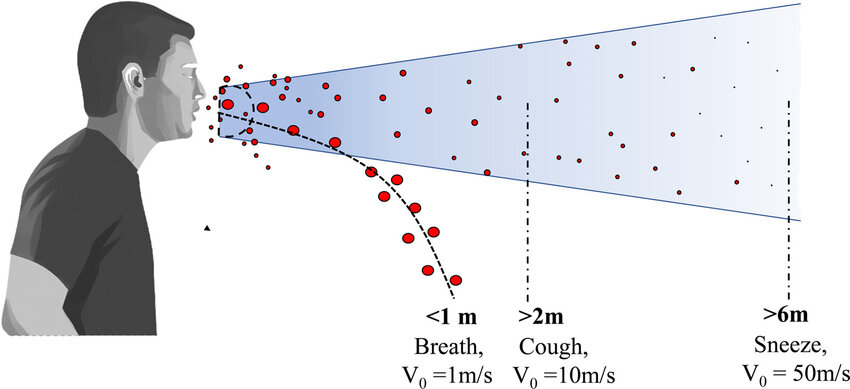
- Sneezing produces more droplets than coughing or talking.
- Regular breathing releases very few droplets into the air.
- Singing and shouting create moderate amounts of airborne particles.
- Coughing typically produces droplets that travel 6-8 feet.
- Sneezing creates the most dramatic spread of all respiratory functions.
Health Implications of Sneeze Distance
Disease Transmission Risks
- Understanding sneeze distance helps prevent illness spread.
- Many respiratory diseases travel through sneeze droplets.
- Common cold viruses can survive in droplets for hours.
- Flu viruses remain active in airborne particles.
- Other infections also use sneezes as transportation methods.
- The farther droplets travel, the more people face potential exposure.
- Crowded indoor spaces present the highest transmission risks.
Vulnerable Populations
Certain groups face higher risks from airborne droplets:
High-Risk Individuals:
- Elderly people with weakened immune systems
- Young children who haven’t built immunity
- People with chronic health conditions
- Individuals taking immunity-suppressing medications
- Healthcare workers with frequent exposure
High-Risk Environments:
- Hospitals and medical facilities
- Schools and daycare centers
- Public transportation systems
- Crowded indoor events
- Poorly ventilated buildings
How to Protect Yourself and Others
Proper Sneeze Etiquette
- Learning correct sneeze etiquette protects everyone around you.
- Always cover your nose and mouth when you feel a sneeze coming.
- Use a tissue if you have one available.
- Throw used tissues away immediately after use.
- If no tissue is available, sneeze into your elbow or upper arm.
- Never sneeze into your hands – this spreads germs when you touch surfaces.
- Turn away from other people before sneezing when possible.
- Wash your hands thoroughly after sneezing or handling tissues.
Environmental Controls
- Improving air quality reduces droplet transmission risks.
- Open windows to increase natural ventilation when weather permits.
- Use air purifiers with HEPA filters in indoor spaces.
- Maintain proper humidity levels between 40-60% for optimal conditions.
- Clean surfaces regularly, especially in high-traffic areas.
- Avoid crowded indoor spaces during peak illness seasons.
- Consider wearing masks in high-risk environments.
Personal Hygiene Practices
Good hygiene habits complement proper sneeze etiquette:
Daily Habits:
- Wash hands frequently with soap for 20+ seconds
- Use hand sanitizer when soap isn’t available
- Avoid touching your face throughout the day
- Change clothes after being in crowded public spaces
- Shower regularly to remove potential contaminants
When You’re Sick:
- Stay home to avoid infecting others
- Use tissues consistently and dispose properly
- Increase hand washing frequency
- Avoid close contact with family members when possible
- Sleep in a separate room if sharing living space
Common Myths About Sneezing
Debunking Popular Misconceptions
Many people believe myths about sneezing that aren’t scientifically accurate.
Myth: Sneezing with your eyes open will make them pop out. Truth: Your eyes close automatically, but keeping them open won’t cause damage.
Myth: Your heart stops when you sneeze. Truth: Your heart rhythm might change slightly, but it doesn’t stop beating.
Myth: Holding in a sneeze is always harmless. Truth: Suppressing sneezes can sometimes cause ear or sinus problems.
Myth: Sneezing means you’re getting sick. Truth: Sneezing often results from allergies, bright lights, or irritants.
Myth: You can’t sneeze in your sleep. Truth: While rare, sneezing during sleep can happen during lighter sleep phases.
Scientific Facts vs. Folk Beliefs
Traditional beliefs about sneezing vary across different cultures.
Some cultures view sneezing as good luck or bad omens.
However, scientific research focuses on the biological and health aspects.
Understanding the real science helps people make better health decisions.
Cultural beliefs shouldn’t replace medical knowledge about disease prevention.
Technology and Sneeze Research
Advanced Measurement Techniques
- Modern scientists use sophisticated tools to study sneezing.
- High-speed cameras capture sneeze events in slow motion.
- Laser-based particle counters measure droplet sizes accurately.
- Computer modeling predicts how droplets move through air.
- Thermal imaging shows temperature changes in exhaled air.
- Air quality monitors track particle concentrations in real-time.
- These technologies provide much more accurate data than older methods.
Future Research Directions
- Scientists continue studying sneezing to better understand transmission.
- New research focuses on how different viruses behave in droplets.
- Studies examine how building design affects airborne particle movement.
- Researchers investigate personal protective equipment effectiveness.
- Future work may lead to better prevention strategies.
- Understanding sneeze physics helps design safer public spaces.
Practical Applications in Daily Life
Workplace Safety
- Understanding sneeze distance helps create safer work environments.
- Office layouts can account for droplet spread patterns.
- Meeting rooms need adequate ventilation for gatherings.
- Desk spacing should consider potential transmission distances.
- Common areas require more frequent cleaning protocols.
- Employee education about proper sneeze etiquette reduces illness spread.
Educational Settings
- Schools face unique challenges with sneeze transmission.
- Children don’t always follow proper hygiene practices.
- Classroom ventilation becomes critically important.
- Teaching proper sneeze etiquette helps protect entire school communities.
- Playground activities and close contact increase transmission risks.
School nurses play key roles in monitoring and educating about symptoms.
Healthcare Facilities
Medical settings require the most stringent sneeze protection measures.
Healthcare workers face constant exposure to respiratory droplets.
Patient rooms need specialized ventilation systems.
Waiting areas must account for multiple people potentially sneezing.
Personal protective equipment becomes essential for staff protection.
Isolation protocols help contain highly contagious patients.
FAQs
How far do sneeze droplets travel?
Sneeze droplets can travel up to 26 feet (about 8 meters) in the air, especially in still indoor environments. A 2020 MIT study showed that larger droplets may fall to the ground quickly, but smaller aerosolized particles can remain suspended in the air and travel farther.
Does a sneeze travel 100 mph?
Yes, some estimates suggest that a sneeze can travel up to 100 miles per hour (160 km/h). However, more recent measurements using high-speed imaging place the speed between 50 and 100 mph, depending on individual variability.
How fast is a sneeze in KM?
Converted to metric, a sneeze can reach speeds of 80–160 km/h. This rapid burst is what helps propel mucus and pathogens such long distances.
How far do you drive when you sneeze?
A sneeze typically causes your eyes to close for about 1 second. At 60 mph (96.5 km/h), that means you travel roughly 88 feet (27 meters) with your eyes closed—enough to miss hazards on the road.
What is the fastest sneeze ever recorded?
There is no officially recorded “fastest sneeze” recognized by organizations like Guinness World Records. However, sneeze speeds of up to 100 mph (160 km/h) have been cited in various studies.
Why do I sneeze 20 times in a row?
Frequent sneezing is often triggered by allergic reactions, irritants, or a condition known as “photic sneeze reflex” (sneezing in response to bright light). Multiple sneezes help clear the nasal passages thoroughly.
What is the velocity of a sneeze?
The velocity of air expelled in a sneeze can range from 30 to 100 mph (48 to 160 km/h). The particles carried within that air can exit the body at similar speeds before slowing down due to air resistance.
Can you sneeze in your sleep?
No, sneezing does not occur during REM or deep sleep because the brain essentially shuts down the reflex. However, you may wake up if nasal irritation is strong enough—then sneeze once awake.
Conclusion
How far does a sneeze travel? The answer is much farther than most people realize.
Modern research shows sneezes can reach distances up to 26 feet under certain conditions.
These findings have changed how we think about disease transmission and personal protection.
Small droplets from sneezes can stay airborne for 10 minutes or longer.
Environmental factors like ventilation, humidity, and temperature all affect sneeze distance.
Understanding these facts helps everyone make better decisions about health and safety.
Proper sneeze etiquette protects both you and the people around you.
Simple actions like covering your nose and mouth can significantly reduce transmission risks.
The science behind sneezing continues to evolve as researchers learn more.
What remains constant is the importance of good hygiene practices and awareness.
Next time you feel a sneeze coming, remember that those few seconds can impact people much farther away than you might expect.
Take responsibility for your sneezes, and encourage others to do the same.
Your awareness and actions can help create healthier environments for everyone.