

What is a Purple Alert in Florida and why should every resident know about this new law? This groundbreaking legislation protects vulnerable adults with cognitive impairments who go missing.
Purple Alert Florida represents a major step forward in public safety and community protection.
The system works similar to Amber Alerts but focuses specifically on adults with mental health conditions, dementia, or developmental disabilities.




Understanding this new alert system could help save lives in your community.

What Is a Purple Alert in Florida?
A Purple Alert in Florida is an emergency notification system designed to help locate missing adults with cognitive impairments, mental health conditions, or developmental disabilities.
The Florida Purple Alert system activates when adults aged 18 or older go missing and meet specific criteria related to their mental or cognitive state.
This alert system fills a critical gap in emergency response protocols that previously existed between Amber Alerts for children and Silver Alerts for elderly individuals.
Purple Alert Florida became law through legislative action aimed at protecting some of the most vulnerable members of our communities.
The system leverages multiple communication channels including radio, television, highway signs, and mobile phone notifications to spread awareness quickly.
Law enforcement agencies across Florida can now request Purple Alert activation when they determine a missing person case meets the established criteria.
Understanding the Purple Alert System
How Purple Alerts Work
Purple Alerts function through a coordinated network of law enforcement agencies, media outlets, and the Florida Department of Law Enforcement.
When someone reports a missing person who fits the Purple Alert criteria, local police departments begin their initial investigation.
If the case meets specific requirements, officers can request Purple Alert activation through official channels.
The Florida Department of Law Enforcement reviews each request and makes the final decision on alert activation.
Once approved, the alert spreads across multiple platforms within minutes to maximize public awareness.
Key Features of Purple Alert Florida
The Purple Alert system includes several important features that make it effective:
- Statewide Coverage: The alert reaches every county in Florida simultaneously
- Multi-Platform Distribution: Messages appear on TV, radio, highway signs, and phones
- Rapid Response: Alerts typically activate within 30 minutes of approval
- Detailed Information: Each alert includes physical descriptions, last known location, and relevant medical information
- Public Engagement: Citizens receive clear instructions on how to help
Purple Alert vs Other Alert Systems
Purple Alert Florida differs from other emergency notification systems in several key ways.
Amber Alerts focus exclusively on missing children under 18 years old.
Silver Alerts target elderly individuals, typically those 65 and older with cognitive impairments.
Purple Alerts bridge the gap for adults between 18 and 65 who have mental health conditions or developmental disabilities.
This targeted approach ensures appropriate resources and public response for each demographic group.
Who Qualifies for a Purple Alert in Florida?
Age Requirements
Purple Alert Florida applies to missing persons who are 18 years of age or older.
There is no upper age limit for Purple Alert activation.
This broad age range ensures coverage for adults with lifelong developmental disabilities and those who develop cognitive impairments later in life.
Cognitive and Mental Health Conditions
The missing person must have a verified cognitive impairment, mental health condition, or developmental disability.
Common qualifying conditions include:
- Dementia and Alzheimer’s disease
- Autism spectrum disorders
- Intellectual disabilities
- Traumatic brain injuries
- Severe mental health conditions
- Down syndrome and other genetic conditions
Additional Criteria
Several other factors must be present for Purple Alert activation:
The person must be missing under circumstances that indicate they may be in danger.
Law enforcement must have enough descriptive information to make the alert useful to the public.
The missing person must be from Florida or last seen within Florida state boundaries.
There must be no evidence that the disappearance was voluntary or involved criminal activity by the missing person.
The Legal Framework Behind Purple Alert Florida
Legislative History
- The Purple Alert law in Florida emerged from growing recognition of gaps in existing emergency alert systems.
- Advocates and families of individuals with disabilities pushed for legislation that would provide better protection for vulnerable adults.
- The Florida Legislature passed the Purple Alert bill with bipartisan support in 2022.
- Governor Ron DeSantis signed the legislation into law, making Florida one of the first states to implement this type of alert system.
Legal Requirements and Procedures
- The Purple Alert law establishes specific legal requirements for activation and operation.
- Law enforcement agencies must follow established protocols when requesting Purple Alert activation.
- The Florida Department of Law Enforcement maintains oversight of the entire system.
- Clear guidelines exist for when alerts should be activated, updated, or cancelled.
Penalties and Compliance
- The law includes provisions for ensuring compliance with Purple Alert procedures.
- Agencies that fail to follow proper protocols may face review and corrective action.
- False or inappropriate alert activations can result in disciplinary measures.
- Regular training and updates help ensure all participating agencies understand their responsibilities.
How to Respond to a Purple Alert
What to Do When You Receive an Alert
- When you receive a Purple Alert notification, take immediate action to help.
- Read the alert information carefully, including the person’s description and last known location.
- Look for the missing person in your immediate area and anywhere you travel.
- Check any security cameras or doorbell cameras you may have access to.
- Contact local businesses or neighbors who might have seen the person.
Reporting a Sighting
- If you see someone who matches the Purple Alert description, call 911 immediately.
- Do not approach the person directly, as they may be confused or frightened.
- Provide dispatchers with your exact location and describe what you observed.
- Stay on the line with emergency services until they arrive or tell you it’s safe to disconnect.
- Continue monitoring the person’s location if possible without putting yourself at risk.
What Not to Do
- Never ignore a Purple Alert notification, even if you think it doesn’t apply to your area.
- Don’t assume someone else will report a sighting – every call matters.
- Avoid sharing unverified information about the missing person on social media.
- Don’t attempt to detain or restrain the missing person unless you are trained to do so safely.
- Never provide false information to law enforcement about Purple Alert cases.
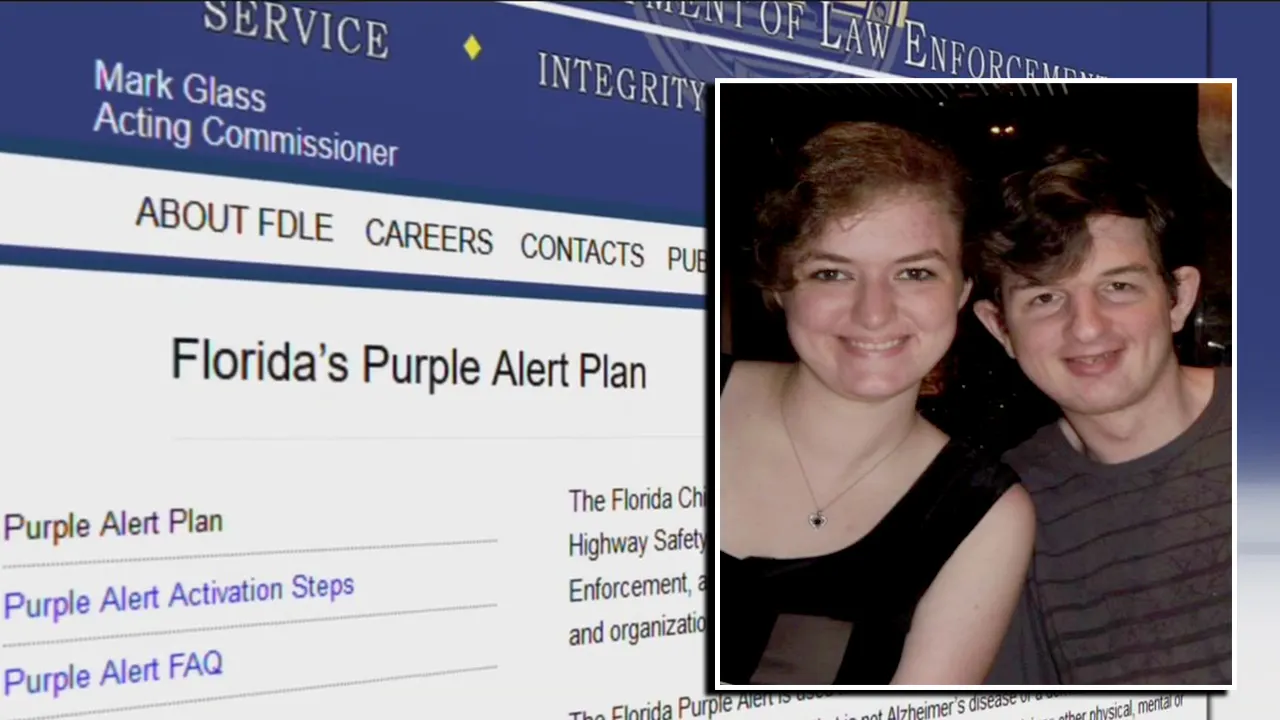
Statistics and Impact of Purple Alert Systems
National Missing Person Statistics
Missing person cases involving adults with cognitive impairments represent a significant public safety challenge.
According to the National Missing and Unidentified Persons System:
- Over 600,000 people go missing in the United States each year
- Adults with cognitive impairments are 5 times more likely to go missing
- Missing persons with dementia face life-threatening risks within 24 hours
- Only 62% of missing adults with cognitive impairments are found within 24 hours
Florida-Specific Data
Florida’s large population includes many individuals who could benefit from Purple Alert protection.
The state has approximately:
- 580,000 adults with developmental disabilities
- 120,000 people living with Alzheimer’s disease
- 1.2 million adults with some form of cognitive impairment
- 300+ missing person cases involving vulnerable adults each year
Success Stories from Other States
States with similar alert systems have seen positive results:
Delaware’s Purple Alert system has helped locate missing individuals in 78% of activated cases.
Virginia’s Critically Missing Adult Alert has contributed to finding missing persons within an average of 8 hours.
Texas has reported a 45% increase in successful missing person recoveries since implementing their vulnerable adult alert system.
Technology and Purple Alert Distribution
Communication Channels
Purple Alert Florida utilizes multiple technology platforms to reach the maximum number of people.
Television and Radio Broadcasting Local TV and radio stations interrupt regular programming to broadcast Purple Alert information.
Highway Electronic Signs Digital highway signs display Purple Alert information to drivers across Florida.
Mobile Phone Notifications Cell phone users receive Purple Alert messages through the Emergency Alert System.
Social Media Integration Official law enforcement social media accounts share Purple Alert information.
Geographic Targeting
The Purple Alert system can target specific geographic areas based on the missing person’s last known location.
Technology allows for precise targeting within certain radius zones.
This approach prevents alert fatigue while ensuring relevant communities receive notifications.
Alerts can expand to wider geographic areas if the search requires it.
Future Technology Enhancements
Florida continues to explore new technologies to improve Purple Alert effectiveness.
Potential enhancements include:
- Facial recognition integration with security camera networks
- GPS tracking capabilities for consenting individuals
- Smartphone apps with enhanced alert features
- Artificial intelligence to predict likely search areas
Community Impact and Awareness
Public Education Initiatives
Successful Purple Alert implementation requires community education and awareness.
Florida has launched public education campaigns to inform residents about the new system.
These campaigns target:
- General public awareness about Purple Alert
- Training for caregivers and family members
- Education for businesses and community organizations
- Specialized training for first responders
Community Partnerships
Purple Alert Florida relies on partnerships with various community organizations.
Key partners include:
- Disability advocacy groups
- Mental health organizations
- Senior centers and adult day programs
- Healthcare providers and hospitals
- Schools and educational institutions
Volunteer Opportunities
Community members can volunteer to support Purple Alert efforts.
Volunteer activities include:
- Joining search teams when appropriate
- Helping with public education campaigns
- Supporting families of missing persons
- Participating in community awareness events
Challenges and Limitations
System Limitations
Purple Alert Florida faces several challenges that affect its effectiveness.
Alert Fatigue Too many alerts can cause people to ignore notifications.
Geographic Limitations Missing persons may cross state boundaries, limiting alert effectiveness.
Technology Barriers Not all residents have access to modern communication technologies.
Resource Constraints Limited law enforcement resources can affect response times.
Addressing Challenges
Florida continuously works to address Purple Alert system limitations.
Solutions include:
- Careful criteria application to prevent overuse
- Interstate cooperation agreements
- Multiple communication channel utilization
- Resource allocation optimization
Future Improvements
Ongoing evaluation helps identify areas for Purple Alert system enhancement.
Regular reviews assess:
- Alert effectiveness rates
- Response time improvements
- Technology upgrade opportunities
- Community feedback integration
Frequently Asked Questions
What makes Purple Alert different from Silver Alert?
Purple Alert Florida focuses on adults with cognitive impairments regardless of age, while Silver Alert typically targets elderly individuals.
Purple Alert covers a broader range of mental health and developmental conditions.
The alert criteria and response procedures are specifically designed for the unique needs of adults with cognitive disabilities.
How long does a Purple Alert stay active?
Purple Alerts remain active until the missing person is found or law enforcement determines the alert is no longer necessary.
Most alerts resolve within 24-48 hours, but some may continue longer if circumstances warrant.
Law enforcement regularly reviews active alerts to ensure they remain appropriate and effective.
Can family members request a Purple Alert?
Family members cannot directly request Purple Alert activation.
They must report the missing person to local law enforcement, who then evaluates the case for Purple Alert criteria.
Law enforcement makes the final decision on whether to request Purple Alert activation.
What if someone doesn’t want to be found?
Purple Alert only activates when there’s evidence the person is in danger due to their cognitive impairment.
If investigators determine the person left voluntarily and is not in danger, Purple Alert will not activate.
The system respects individual rights while prioritizing safety for vulnerable adults.
What are the color alerts in Florida?
Florida uses color-coded alerts like AMBER, SILVER, PURPLE, and BLUE to notify the public about missing persons and endangered individuals.
What is a Purple Alert in Florida?
A Purple Alert is issued when an adult with a mental or cognitive disability goes missing and is at risk, but does not meet AMBER or Silver Alert criteria.
What is a Silver Alert in Florida?
A Silver Alert is used to help locate missing older adults, usually aged 60+, with Alzheimer’s, dementia, or other cognitive impairments.
What do you mean by Purple Alert?
A Purple Alert helps find missing adults with developmental disabilities, brain injuries, or other impairments who are in danger.
What is a Grey Alert?
A Grey Alert is not an official alert system in Florida or the U.S.; it is sometimes used informally or misreported online.
What is a Green Alert in Florida?
Florida does not currently use a Green Alert, but in some states, Green Alerts help locate missing military veterans with PTSD or mental health issues.
Conclusion
Purple Alert Florida represents a significant advancement in protecting vulnerable adults with cognitive impairments.
This new law fills a critical gap in emergency response systems that previously existed.
Understanding how Purple Alert works helps every Florida resident become part of the solution when someone goes missing.
The system’s success depends on community awareness, participation, and support.
By knowing what Purple Alert means and how to respond, you can help save lives in your community.
Florida’s implementation of Purple Alert demonstrates the state’s commitment to protecting its most vulnerable residents.
The system will continue to evolve and improve based on experience and community feedback.
Every Florida resident should familiarize themselves with Purple Alert procedures and be prepared to help when needed.
Together, we can make Florida a safer place for adults with cognitive impairments and their families.
Remember: when you receive a Purple Alert, your quick action could make the difference between life and death for someone’s loved one.