

Who won Florida special elections has been the burning question on every political watcher’s mind. The Florida special elections of 2025 brought major changes to Congress.
These elections filled two important House seats that became vacant.
Let me walk you through everything that happened and what it means for politics.




Who Won the Florida Special Elections in 2025?
Jimmy Patronis and Randy Fine both won their respective Florida special elections in April 2025.
These Republican candidates secured victories in two heavily contested congressional districts.
The elections took place on April 1, 2025, in Florida’s 1st and 6th Congressional Districts.
Both winners will now serve in the U.S. House of Representatives.
Their victories helped Republicans maintain control of these traditionally red districts.
Quick Winner Summary:
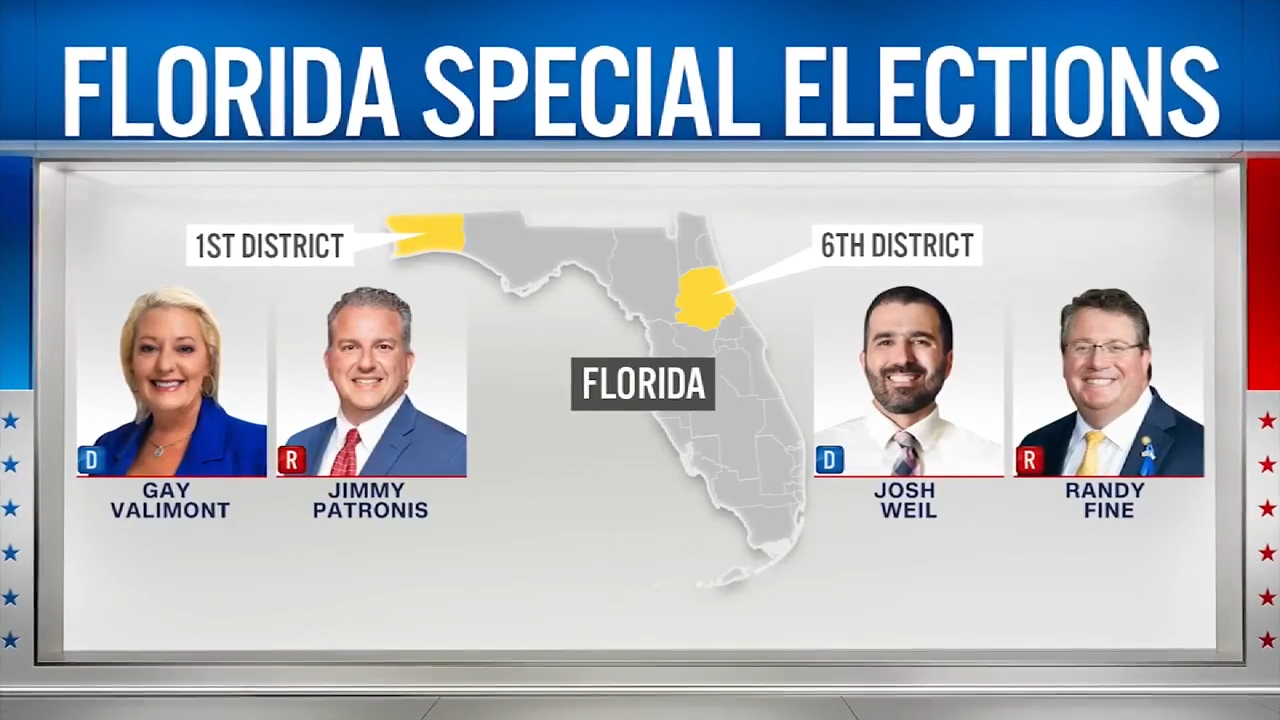
- Florida’s 1st District: Jimmy Patronis (Republican) defeated Gay Valimont (Democrat)
- Florida’s 6th District: Randy Fine (Republican) defeated Josh Weil (Democrat)
Jimmy Patronis Wins Florida’s 1st Congressional District
Jimmy Patronis secured his victory in Florida’s 1st Congressional District with impressive results.
He won with 57% of the vote against Democrat Gay Valimont.
The Associated Press called the race at 7:20 p.m. on election night.
Patronis had served as Florida’s Chief Financial Officer since 2017.
He received a strong endorsement from President Donald Trump.
This seat previously belonged to Matt Gaetz, who resigned after Trump nominated him for Attorney General.
Key Facts About Patronis’s Victory:
- Vote Share: 57% (with 99% of votes counted)
- Opponent: Gay Valimont (Democrat and gun violence activist)
- Background: Panama City native, current Florida CFO
- Endorsement: Backed by Donald Trump
- Previous Role: Florida’s Chief Financial Officer since 2017
Randy Fine Wins Florida’s 6th Congressional District
Randy Fine claimed victory in Florida’s 6th Congressional District special election.
He defeated Democratic challenger Josh Weil, a schoolteacher.
Fine had previously served as a Florida state senator.
He won the Republican primary with an overwhelming 83% of the vote.
This district was vacated by Michael Waltz, who joined Trump’s administration.
The victory margin was narrower than expected in this traditionally Republican stronghold.
Randy Fine’s Election Details:
- Primary Performance: Won with 83% against Aaron Baker and Ehsan Joarder
- General Election Opponent: Josh Weil (Democrat, schoolteacher)
- Previous Position: Florida State Senator
- District Safety: Considered safely Republican
- Vacated By: Michael Waltz (now in Trump administration)
Why These Special Elections Mattered
These Florida special elections carried significant importance for Congress.
The results helped Republicans maintain their narrow House majority.
Before these elections, Republicans held a razor-thin margin in the House.
The victories gave House Speaker Mike Johnson more breathing room.
Republicans now hold a 220-213 majority in the House.
This means they can afford to lose up to three Republican votes on party-line legislation.
Impact on House Control:
- New GOP Majority: 220-213 (with two Democratic vacancies)
- Voting Buffer: Can lose 3 Republicans and still pass legislation
- Speaker Benefit: More flexibility for Mike Johnson
- Political Significance: Maintains Republican control of House
The Districts and Their Political Landscape
Florida’s 1st Congressional District has a Cook Partisan Voting Index rating of R+19.
This makes it the most Republican district in Florida.
Donald Trump won this district with 68.1% in the 2024 presidential election.
Matt Gaetz previously held this seat with 66.0% of the vote in 2024.
Florida’s 6th Congressional District is also considered safely Republican.
Trump received roughly 65% of the vote in this district in 2024.
Michael Waltz won his final reelection bid with 67% of the vote.
District Statistics:
- 1st District Trump Support: 68.1% (2024 presidential election)
- 1st District Gaetz Support: 66.0% (2024 House election)
- 6th District Trump Support: 65% (2024 presidential election)
- 6th District Waltz Support: 67% (2024 House election)
- Cook Rating (1st District): R+19 (most Republican in Florida)
Election Timeline and Key Dates
The Florida special elections followed a specific timeline throughout 2025.
Primary elections took place in January 2025.
The general elections occurred on April 1, 2025.
Results were called on election night by major news outlets.
Winners were sworn into Congress shortly after certification.
Important Timeline:
- January 2025: Primary elections held
- January 28, 2025: Unofficial primary results posted
- April 1, 2025: General election day
- April 1, 7:20 PM: AP called Patronis race
- April 2, 2025: Both winners declared victorious
Narrower Margins Than Expected
Both Republican winners achieved victory with smaller margins than their predecessors.
Jimmy Patronis won by a narrower margin than Matt Gaetz typically received.
Randy Fine underperformed Michael Waltz by about 10 percentage points.
This trend reflects changing political dynamics even in safe Republican districts.
The narrower margins surprised political analysts and observers.
Margin Comparisons:
- Patronis vs. Gaetz: Smaller victory margin than Gaetz’s typical performance
- Fine vs. Waltz: Underperformed by approximately 10 percentage points
- Historical Context: Both districts traditionally vote Republican by larger margins
- Analyst Surprise: Narrower margins than expected in safe seats
Primary Election Results Breakdown
The primary elections revealed interesting voter preferences.
Randy Fine dominated his Republican primary with 83% of the vote.
He defeated Aaron Baker and Ehsan Joarder convincingly.
On the Democratic side, Josh Weil won with 61% against Ges Selmont.
Jimmy Patronis also performed well in his Republican primary.
Primary Performance:
- Randy Fine (R): 83% victory over Aaron Baker and Ehsan Joarder
- Josh Weil (D): 61% victory over Ges Selmont
- Jimmy Patronis (R): Strong primary performance
- Primary Significance: Showed clear voter preferences
Campaign Strategies and Messaging
Both winning candidates focused on conservative messaging.
Jimmy Patronis emphasized his experience as Florida’s CFO.
He highlighted his financial expertise and government experience.
Randy Fine campaigned on his legislative record in the state senate.
Both candidates aligned themselves closely with Trump’s agenda.
Their Democratic opponents struggled to gain traction in these red districts.
Campaign Highlights:
- Patronis Strategy: Emphasized financial expertise and government experience
- Fine Strategy: Leveraged state senate legislative record
- Trump Alignment: Both candidates closely tied to Trump agenda
- Democratic Challenges: Struggled in heavily Republican districts

What This Means for Future Elections
These special election results provide insights for future campaigns.
The narrower margins suggest changing voter behavior patterns.
Republicans may need to work harder even in safe districts.
Democrats showed they can compete better than expected.
The results may influence 2026 midterm election strategies.
Future Implications:
- Changing Patterns: Narrower margins in safe Republican seats
- Democratic Competitiveness: Better performance than historical norms
- 2026 Implications: May influence midterm election strategies
- Campaign Adjustments: Both parties may need new approaches
Voter Turnout and Participation
Special elections typically see lower voter turnout than general elections.
Both districts experienced moderate participation levels.
Vote-by-mail, early voting, and Election Day voting all contributed to totals.
Some provisional ballots required resolution after Election Day.
The turnout patterns matched expectations for special elections.
Turnout Details:
- Voting Methods: Vote-by-mail, early voting, Election Day
- Participation Level: Moderate for special elections
- Provisional Ballots: Some required post-election resolution
- Deadline: Provisional issues resolved by January 30th
Media Coverage and National Attention
These Florida special elections received significant national media coverage.
Major news outlets provided live election results and analysis.
The races were seen as early tests of political momentum.
Cable news networks covered the elections extensively.
Political commentators analyzed the results for broader implications.
Media Attention:
- National Coverage: Extensive coverage by major news outlets
- Live Results: Real-time reporting on election night
- Analysis: Political commentators provided detailed analysis
- Momentum Test: Seen as early political barometer
Candidate Backgrounds and Qualifications
Jimmy Patronis brought extensive government experience to his campaign.
He served as Florida’s Chief Financial Officer since 2017.
His background includes business and public service experience.
Randy Fine had legislative experience as a Florida state senator.
He built a reputation as a conservative legislator.
Both candidates had strong Republican credentials.
Candidate Profiles:
- Patronis Experience: Florida CFO since 2017, business background
- Fine Experience: Florida State Senator, conservative legislator
- Qualifications: Both brought government experience
- Republican Credentials: Strong conservative backgrounds
Election Security and Integrity
Florida conducted these special elections with standard security measures.
The state used established voting procedures and protocols.
Election officials ensured proper ballot counting and verification.
Results underwent standard certification processes.
No significant security issues were reported.
Security Measures:
- Standard Protocols: Established voting procedures followed
- Ballot Verification: Proper counting and verification conducted
- Certification Process: Standard results certification
- No Major Issues: No significant security concerns reported
Financial Aspects of the Campaigns
Both races involved significant campaign spending.
Republican candidates had fundraising advantages in these safe seats.
Democratic challengers faced funding challenges.
Outside groups contributed to both campaigns.
The financial disparity reflected the districts’ political leanings.
Campaign Finance:
- Republican Advantage: Better fundraising in safe seats
- Democratic Challenges: Funding difficulties for challengers
- Outside Groups: Contributed to both campaigns
- Spending Disparity: Reflected district political leanings
Demographic Voting Patterns
The election results showed traditional demographic voting patterns.
Rural areas strongly supported Republican candidates.
Urban areas provided more Democratic support.
Age and education levels influenced voting preferences.
The demographic breakdown matched historical patterns.
Demographic Trends:
- Rural Support: Strong Republican backing in rural areas
- Urban Performance: Democrats performed better in urban areas
- Age Factors: Age influenced voting preferences
- Education Levels: Education correlated with voting patterns
Impact on Local Politics
These victories will influence Florida’s political landscape.
Both winners will have increased political profiles.
Their success may inspire other Republican candidates.
The results reinforce Republican dominance in these regions.
Local political dynamics may shift based on these outcomes.
Local Political Impact:
- Increased Profiles: Winners gain higher political visibility
- Inspiration Effect: May encourage other Republican candidates
- Regional Dominance: Reinforces Republican control
- Dynamic Shifts: Local political landscape may change
Looking Ahead: What’s Next?
Both newly elected representatives will join Congress immediately.
They’ll participate in important legislative debates and votes.
Their positions will influence House Republican strategy.
The 2026 midterm elections will test their staying power.
These seats will likely remain competitive in future cycles.
Future Outlook:
- Immediate Service: Join Congress and participate in legislation
- Strategic Influence: Impact House Republican strategy
- 2026 Elections: Face their first regular election cycle
- Continued Competition: Seats likely remain competitive
Conclusion
The Florida special elections of 2025 delivered clear Republican victories.
Jimmy Patronis and Randy Fine successfully won their respective races.
These wins helped Republicans maintain their House majority.
The narrower margins suggest evolving political dynamics.
Both winners now face the challenge of effective representation.
These elections provide valuable insights for future political campaigns.
The results demonstrate that even safe seats require serious campaigning.
Florida continues to play a crucial role in national politics.
Key Takeaways:
- Clear Victories: Republicans won both contested seats
- Maintained Control: GOP preserved House majority
- Narrower Margins: Victories smaller than historical norms
- Future Implications: Results influence political strategies
- Continued Importance: Florida remains politically significant