

Planning a trip to Japan but wondering how much to travel to Japan in 2025? Here’s the deal – most people think Japan travel costs will break their bank account.
But that’s not true if you know the real numbers.
This complete Japan travel budget guide shows you exactly what you’ll spend on flights, hotels, food, transportation, and activities.




No fluff, no guesswork – just real costs from real travelers who’ve been there and done that.
How Much Does It Really Cost to Travel to Japan in 2025?
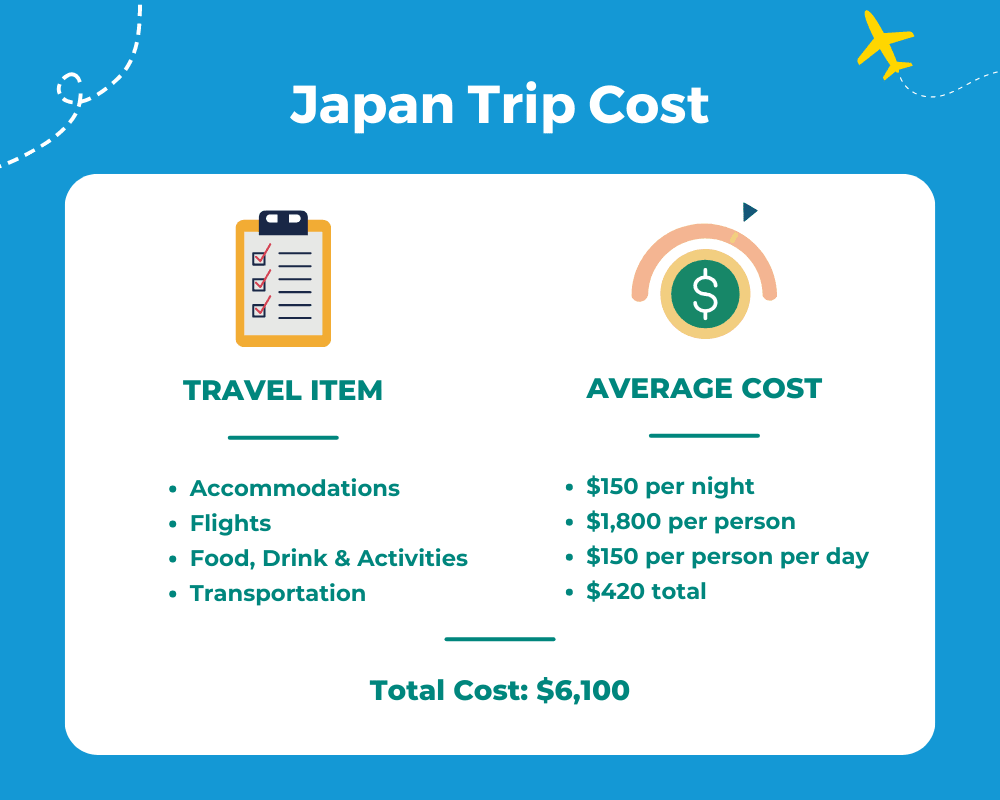
The average cost to travel to Japan ranges from $150 to $400 per day per person.
But here’s what nobody tells you about Japan travel expenses.
Your total Japan trip cost depends on three main factors: your travel style, trip duration, and the cities you visit.
- Budget travelers spend around $80-150 per day.
- Mid-range travelers spend $200-300 per day.
- Luxury travelers can spend $400+ per day.
For a 10-day Japan trip, expect to spend:
- Budget: $1,500-2,500 per person
- Mid-range: $3,000-4,500 per person
- Luxury: $5,000-8,000+ per person
Japan Flight Costs: What You’ll Actually Pay
Flight costs to Japan vary dramatically based on your departure location and booking timing.
From the United States:
- Economy class: $600-1,200 roundtrip
- Premium economy: $1,500-2,500 roundtrip
- Business class: $3,000-6,000 roundtrip
From Europe:
- Economy class: $700-1,400 roundtrip
- Premium economy: $1,800-3,000 roundtrip
- Business class: $4,000-7,000 roundtrip
From Southeast Asia:
- Economy class: $300-800 roundtrip
- Premium economy: $800-1,500 roundtrip
- Business class: $2,000-4,000 roundtrip
Best Time to Book Japan Flights
Book your Japan flights 2-3 months in advance for the best deals.
Tuesday and Wednesday departures typically cost 15-20% less than weekend flights.
Avoid cherry blossom season (March-May) and Golden Week (late April-early May) for cheaper airfare.
Use flight comparison websites like Skyscanner, Google Flights, and Momondo to find the lowest prices.
Japan Accommodation Costs: From Hostels to Luxury Hotels
Japan accommodation prices vary significantly based on location, season, and property type.
Budget Accommodation (Per Night):
- Hostels: $25-45
- Capsule hotels: $30-60
- Budget business hotels: $50-80
- Ryokan (traditional inns): $80-150
Mid-Range Accommodation (Per Night):
- 3-star hotels: $100-180
- Boutique hotels: $150-250
- Mid-range ryokan: $200-400
Luxury Accommodation (Per Night):
- 5-star hotels: $300-800
- Luxury ryokan: $500-1,500
- High-end resorts: $400-1,000+
Tokyo Hotel Costs
Tokyo accommodation costs are typically 20-30% higher than other Japanese cities.
Shibuya and Shinjuku districts have the highest hotel rates.
Asakusa and Ueno offer more budget-friendly options with easy subway access.
Tokyo Average Hotel Costs:
- Budget hotels: $60-100 per night
- Mid-range hotels: $120-250 per night
- Luxury hotels: $350-1,000+ per night
Osaka and Kyoto Hotel Costs
Osaka and Kyoto accommodation prices are slightly lower than Tokyo.
Kyoto ryokan experiences are more expensive but offer authentic Japanese hospitality.
Osaka/Kyoto Average Hotel Costs:
- Budget options: $45-85 per night
- Mid-range options: $100-200 per night
- Luxury options: $300-800 per night
Japan Food Costs: Street Food to Michelin Stars
Japan food expenses range from incredibly affordable to world-class expensive.
Budget Food Options (Per Meal):
- Convenience store meals: $3-8
- Ramen shops: $5-12
- Fast food chains: $5-10
- Food courts: $6-15
Mid-Range Dining (Per Meal):
- Casual restaurants: $15-30
- Sushi restaurants: $25-60
- Izakaya (Japanese pubs): $20-40
- Department store restaurants: $15-35
High-End Dining (Per Meal):
- Fine dining restaurants: $80-200+
- Michelin-starred restaurants: $150-500+
- Kaiseki (traditional multi-course): $200-800+
- Exclusive sushi omakase: $300-1,000+
Daily Food Budget Breakdown
Budget travelers: $25-40 per day
- Breakfast: Convenience store ($3-5)
- Lunch: Ramen or fast food ($8-12)
- Dinner: Casual restaurant ($15-25)
Mid-range travelers: $50-80 per day
- Breakfast: Hotel or cafe ($8-15)
- Lunch: Restaurant meal ($15-25)
- Dinner: Nice restaurant ($25-40)
Luxury travelers: $100+ per day
- All meals at high-end establishments
- Multiple courses and premium ingredients
- Wine and sake pairings
Japan Transportation Costs: Getting Around the Country
Japan transportation costs can be significant, but the JR Pass makes it affordable for tourists.
JR Pass Prices (2025):
- 7-day pass: $278 (Ordinary) / $370 (Green Car)
- 14-day pass: $445 (Ordinary) / $590 (Green Car)
- 21-day pass: $570 (Ordinary) / $755 (Green Car)
Individual Train Ticket Costs
Without a JR Pass, individual shinkansen (bullet train) tickets are expensive:
- Tokyo to Osaka: $120 one-way
- Tokyo to Kyoto: $110 one-way
- Osaka to Hiroshima: $85 one-way
- Tokyo to Hiroshima: $155 one-way
Local Transportation Costs
Tokyo Metro and Subway:
- Single rides: $1.50-3.50
- Day passes: $8-15
- Weekly passes: $35-50
Osaka Municipal Transportation:
- Single rides: $1.20-3.00
- Day passes: $6-12
Kyoto City Bus:
- Single rides: $2.30
- Day passes: $6.50
Taxi Costs in Japan
Japanese taxi fares are among the world’s highest:
- Initial fare: $6-8 (first 1-2 km)
- Additional distance: $1.50-2.00 per 300m
- Airport to city center: $60-120 depending on the city
Japan Activities and Attractions Costs
Japan offers both free and expensive entertainment options.
Free Activities:
- Temple and shrine visits
- Public parks and gardens
- Window shopping in major districts
- Hiking trails and nature walks
- Beach visits (seasonal)
Paid Attractions (Entry Fees):
- Tokyo Disneyland/DisneySea: $65-75
- Universal Studios Japan: $55-70
- Fushimi Inari Shrine: Free
- Kiyomizu-dera Temple: $4
- Tokyo Skytree: $18-28
- Osaka Castle: $6
- Hiroshima Peace Memorial: $2
Cultural Experiences Costs
Traditional Activities:
- Tea ceremony experience: $25-80
- Kimono rental: $40-100 per day
- Sumo wrestling tournament: $25-200
- Kabuki theater: $20-150
- Onsen (hot springs): $10-30
Modern Entertainment:
- Karaoke (per hour): $15-40
- Arcade gaming: $20-50 per session
- Baseball games: $15-80
- Concerts and shows: $50-300+
Japan Shopping Budget: Souvenirs to Electronics
Japan shopping costs vary from affordable souvenirs to expensive luxury items.
Typical Souvenir Costs:
- Postcards: $1-3 each
- Keychains: $3-8 each
- Traditional fans: $5-25
- Sake bottles: $15-100
- Japanese snacks: $2-15 per package
- Clothing items: $20-200
Electronics and Gadgets:
- Nintendo Switch games: $50-60
- Cameras: Similar to US prices
- Smartphones: Often more expensive than home
- Anime/manga merchandise: $10-100+
Tax-Free Shopping Benefits
Foreign tourists can claim tax-free shopping on purchases over ¥5,000 ($33).
This 10% discount applies to most electronics, clothing, and general goods.
Keep your passport handy for tax-free purchases at participating stores.
Regional Cost Differences Across Japan
Different Japanese regions have varying cost structures.
Most Expensive Regions:
- Tokyo Metropolitan Area
- Hakone and Mount Fuji area
- Kyoto during peak seasons
- Ski resorts (Niseko, Hakuba)
More Affordable Regions:
- Rural areas and small towns
- Northern Honshu
- Kyushu island
- Off-the-beaten-path destinations
Tokyo vs Osaka Cost Comparison
Tokyo generally costs 15-25% more than Osaka for accommodation and dining.
Transportation costs are similar between both cities.
Osaka street food scene offers better value for budget travelers.
Tokyo has more high-end dining and shopping options.
Seasonal Cost Variations in Japan
Japan travel costs fluctuate significantly based on the season.
Peak Season (Higher Costs):
- Cherry blossom season (March-May): 30-50% price increase
- Golden Week (late April-early May): 40-60% price increase
- Summer festivals (July-August): 20-30% price increase
- Fall foliage (October-November): 25-40% price increase
Off-Peak Season (Lower Costs):
- Winter months (December-February): 20-30% discount
- Rainy season (June-July): 15-25% discount
- Late summer (August-September): 10-20% discount
Best Value Travel Months
January through March (except cherry blossom period) offer the best value.
November and December provide good weather with moderate prices.
Avoid Golden Week and Obon holidays for significant savings.
Money-Saving Tips for Japan Travel
Here are proven strategies to reduce your Japan travel expenses.
Accommodation Savings:
- Book hotels 3-4 weeks in advance
- Stay in business hotels instead of international chains
- Consider capsule hotels for solo travelers
- Use Airbnb in residential areas
- Look for hotel packages that include breakfast
Food Savings:
- Eat lunch at department store restaurant floors
- Try convenience store meals (surprisingly good quality)
- Look for “morning service” breakfast deals
- Avoid tourist-heavy restaurant areas
- Use food delivery apps for discounts
Transportation Savings:
- Calculate if JR Pass saves money for your itinerary
- Use highway buses for long-distance travel
- Walk when possible (great for exploring)
- Rent bicycles in bike-friendly cities
- Use day passes for local transportation
Activity Savings:
- Visit free temples and shrines
- Enjoy free observation decks
- Take advantage of free walking tours
- Visit during free admission days at museums
- Explore public parks and gardens
Sample Japan Travel Budgets by Travel Style
Budget Traveler (10-Day Trip)
Total Estimated Cost: $1,800-2,200
- Flights: $700-900
- Accommodation: $300-450 (hostels/capsule hotels)
- Food: $250-400 (convenience stores, ramen shops)
- Transportation: $278 (JR Pass) + $100 local transport
- Activities: $150-200 (mostly free attractions)
- Shopping/Miscellaneous: $150-250
Mid-Range Traveler (10-Day Trip)
Total Estimated Cost: $3,500-4,200
- Flights: $800-1,200
- Accommodation: $1,000-1,500 (3-star hotels)
- Food: $500-700 (mix of casual and nice restaurants)
- Transportation: $278 (JR Pass) + $150 local transport
- Activities: $400-600 (paid attractions, experiences)
- Shopping/Miscellaneous: $500-700
Luxury Traveler (10-Day Trip)
Total Estimated Cost: $6,500-9,000+
- Flights: $3,000-5,000 (business class)
- Accommodation: $2,500-4,000 (5-star hotels, luxury ryokan)
- Food: $1,000-1,500 (fine dining, Michelin restaurants)
- Transportation: $755 (Green Car JR Pass) + $300 taxis/private transport
- Activities: $800-1,200 (premium experiences)
- Shopping/Miscellaneous: $1,000-2,000
Hidden Costs to Consider
Many travelers overlook these additional Japan travel expenses.
- Travel Insurance: $50-150 for trip coverage
- Visa Fees: Free for most countries (tourist visa waiver)
- Airport Transfers: $15-60 each way depending on the city
- Luggage Storage: $3-8 per day at stations
- Phone/Internet: $40-80 for portable WiFi rental
- Tips: Not expected in Japan (included in service)
- ATM Fees: $3-5 per withdrawal at 7-Eleven ATMs
- Laundry: $3-8 per load at coin laundromats
Is Japan Travel Worth the Cost?
Japan offers exceptional value despite higher costs compared to Southeast Asia.
The country provides unmatched safety, cleanliness, and customer service.
Public transportation efficiency saves time and stress.
Cultural experiences and food quality justify the expense.
What Makes Japan Worth It:
- Zero crime concerns for solo travelers
- Trains run exactly on schedule
- Service quality exceeds expectations
- Unique cultural experiences unavailable elsewhere
- Food safety and quality standards
FAQs
How much does a trip cost to Japan?
A typical 7 to 10-day trip to Japan costs:
-
Budget traveler: $1,500–$2,500
-
Mid-range: $3,000–$5,000
-
Luxury: $6,000+
This includes airfare, accommodation, transport, food, and activities.
Is $5000 enough for a trip to Japan?
Yes, $5,000 is more than enough for a comfortable 10–14 day mid-range trip for one person, covering:
-
Round-trip airfare
-
3–4 star hotels or Ryokans
-
JR Pass for transportation
-
Daily meals, tours, and activities
-
Some luxury experiences
Is $1000 enough for a trip to Japan?
Only if you’re already in Asia and travel extremely budget-style:
-
Hostel stays or capsule hotels ($20–$40/night)
-
Convenience store meals (~$5/meal)
-
No JR Pass; only local public transport
-
Free attractions (temples, parks, walking tours)
If you’re flying from the U.S., $1000 is not enough due to airfare alone costing $700–$1,200 round-trip.
How much money do I need to travel to Japan?
-
Basic (1 week): $1,500
-
Comfortable (10 days): $2,500–$4,000
-
Luxury (10+ days): $5,000+
Factor in flights, lodging, transport (JR Pass ~$275 for 7 days), food, attractions, and shopping.
Is 1 lakh enough for a Japan trip?
(1 lakh INR ≈ $1,200 USD)
Only if you’re traveling from India or Asia, and on a strict budget:
-
Budget flights from India: ₹35,000–₹50,000
-
Hostels, basic food, local trains
-
Skip expensive cities like Tokyo, stick to fewer locations
From the U.S. or Europe: No, 1 lakh INR is not enough.
How much money for 10 days in Japan?
Estimated 10-day costs per person:
-
Budget: $1,200–$1,800
-
Mid-range: $2,500–$4,000
-
Luxury: $5,000+
Breakdown includes:
-
Flights: $800–$1,200 (from US/EU)
-
Hotels: $70–$150 per night
-
JR Pass (7 or 14 days): ~$275–$440
-
Meals: $20–$60/day
-
Attractions/shopping: $200–$400
Is 10 days long enough in Japan?
Yes, 10 days is a great amount of time to:
-
Explore 3–4 cities (e.g., Tokyo, Kyoto, Osaka, Nara)
-
Use a JR Pass efficiently
-
Experience culture, food, nature, and history
-
Not feel rushed, with time for both sightseeing and rest
Are Japan tickets expensive?
From the U.S. or Europe, round-trip tickets to Japan usually cost:
-
Economy class: $700–$1,200
-
Off-season: $600–$800
-
Peak season (cherry blossom, summer): $1,200+
Booking 2–3 months in advance and flying mid-week can reduce costs.
Final Cost Summary and Recommendations
How much does it cost to travel to Japan in 2025?
Plan for $150-400 per person per day depending on your travel style.
A 10-day Japan trip typically costs $1,500-8,000+ per person.
Key Cost Factors:
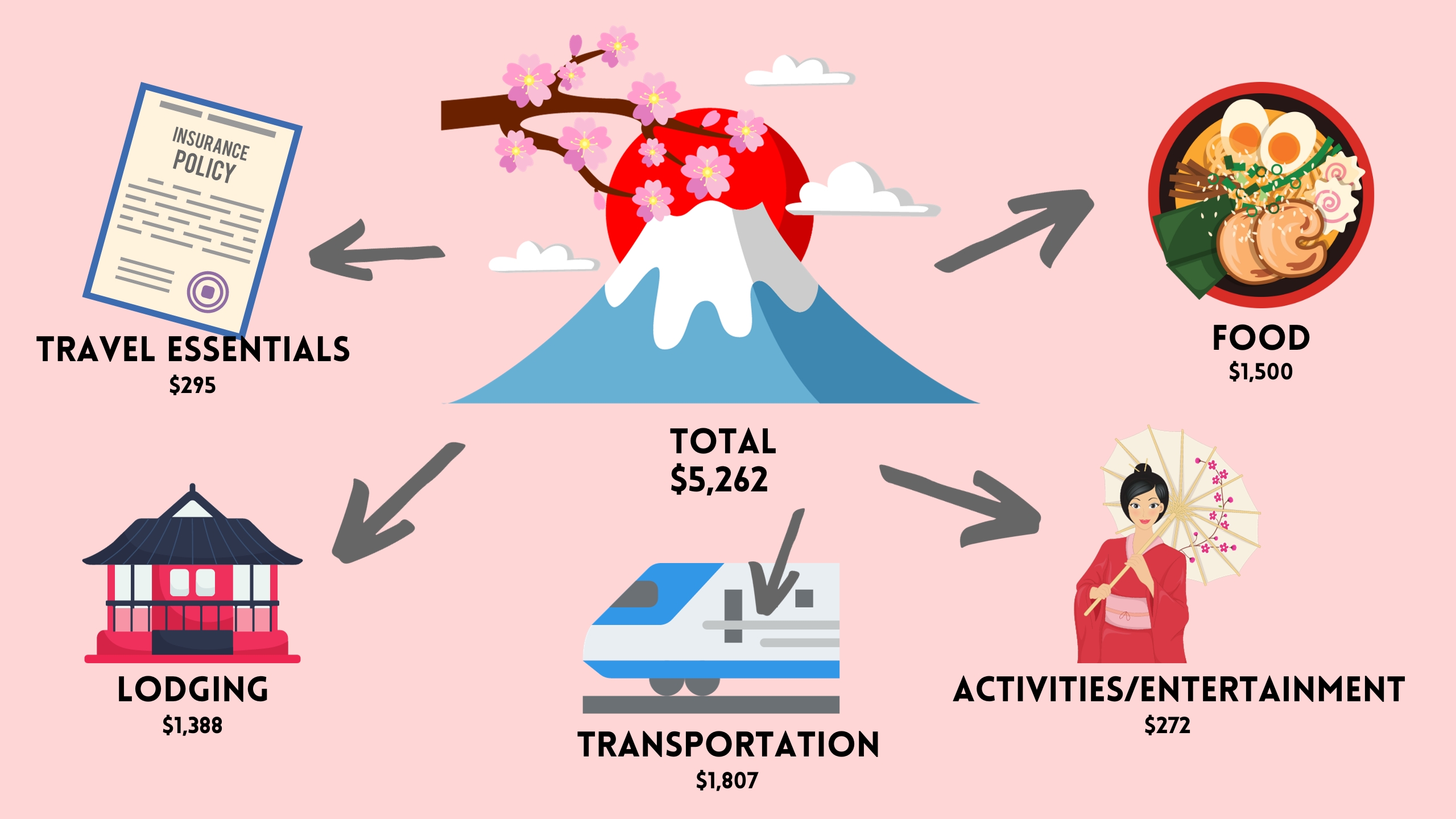
- Accommodation: 30-40% of total budget
- Flights: 25-35% of total budget
- Food: 15-25% of total budget
- Transportation: 10-15% of total budget
- Activities: 10-15% of total budget
Smart Budgeting Strategy:
- Set a realistic daily budget based on your travel style
- Book flights and accommodation early for better rates
- Use the JR Pass if visiting multiple cities
- Mix budget and splurge experiences
- Keep 20% buffer for unexpected expenses
Japan travel costs seem high upfront, but the experience quality and memories created make every dollar worthwhile.
Start planning your Japan adventure today – the Land of the Rising Sun awaits your visit.